IT & Software Contract Arbitration Lawyer Bangalore | Tech Disputes
Software Outsourcing • IP Breaches • SaaS Disputes
IT, Software & Technology Contract Arbitration in Bangalore
Addressing IP Violations, SaaS Defaults, Software Outsourcing Friction, and Tech-Sector SLA Failures
As the “Silicon Valley of India,” Bengaluru is the epicenter of global software development, cloud infrastructure, and deep-tech innovation. Consequently, it is also the prime jurisdiction for high-stakes technology disputes. Traditional court litigation is ill-equipped to handle the nuances of source code theft, cloud downtime metrics, or agile development contract failures. Arbitration offers the speed, confidentiality, and technical expertise required for modern tech disputes.
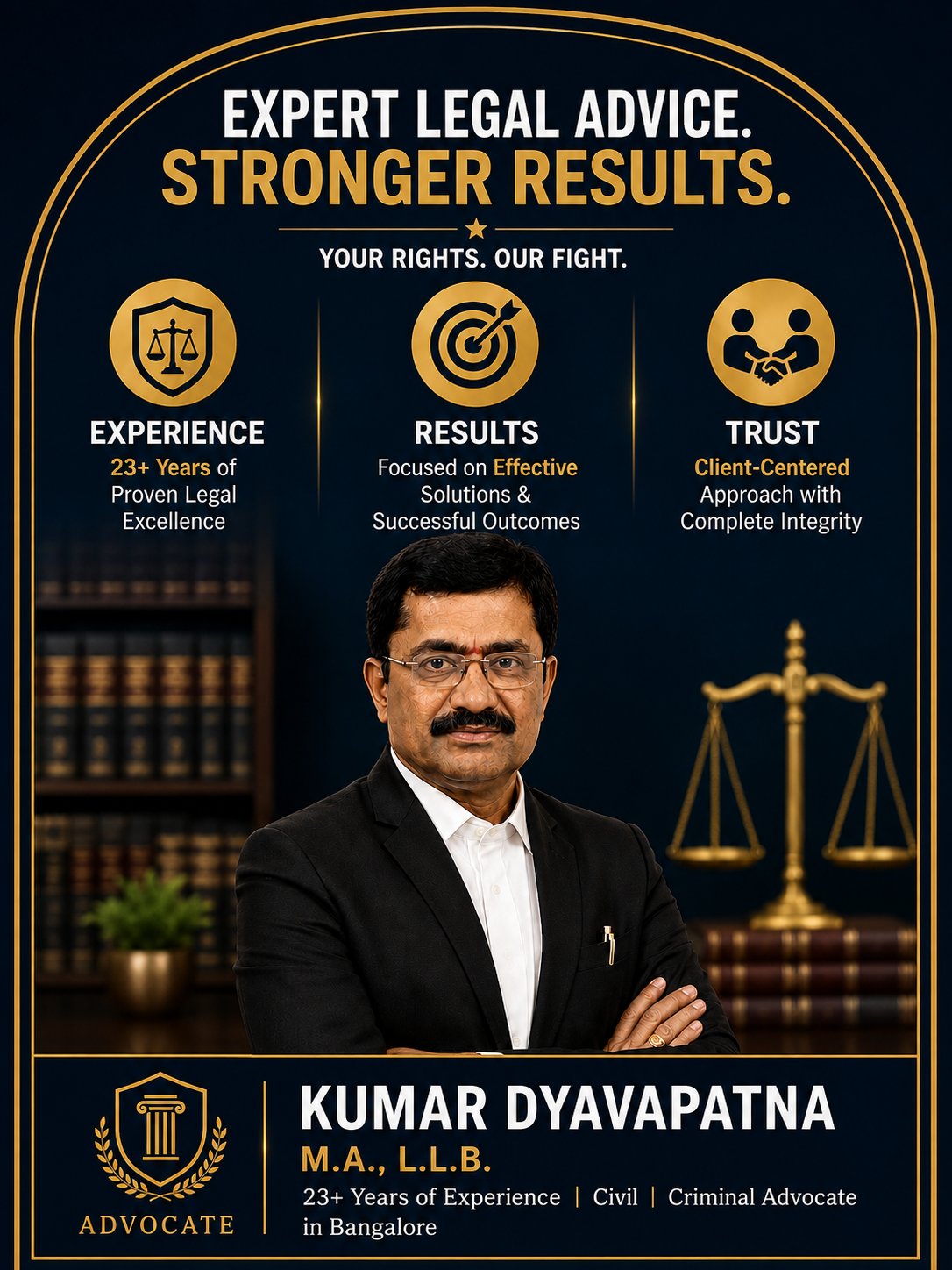
Led by senior Bangalore arbitration advocate Advocate Kumar Dyavapatna, our practice specializes in enforcing Master Services Agreements (MSAs), executing non-disclosure emergency injunctions, and arbitrating intricate IT vendor conflicts. To learn more about our comprehensive commercial resolution framework, visit our primary expert arbitration lawyer guidance hub.
As the nerve center of India’s IT industry, Bangalore hosts thousands of multinational corporations, IT service providers, and deep-tech startups. The complexity of modern software delivery—involving cloud infrastructure, API integrations, and agile development cycles—means that when partnerships fracture, the financial and operational fallout is immediate and severe.
Litigating a failed enterprise software implementation in a traditional civil court often results in years of delays, with judges struggling to comprehend technical nuances like microservices architecture or cryptographic standards. Arbitration allows parties to appoint arbitrators with specific tech-domain expertise, ensuring faster, more accurate, and entirely confidential resolutions. For a broader view of our arbitration practice, explore our expert arbitration lawyer guidance hub.
Facing a critical software contract breach or IP theft in Bengaluru? Consult senior arbitration advocate Advocate Kumar Dyavapatna immediately to secure your rights.
The foundation of IT vendor relationships is the Master Services Agreement (MSA) and its subsequent Statements of Work (SOWs). Disputes frequently arise due to differing interpretations of project scopes, especially in Agile development environments where requirements constantly evolve.
Common arbitration claims under MSAs include:
Scope Creep vs. Change Requests: Disagreements over whether requested features are included in the original fixed-price SOW or require additional billing.
Missed Milestones & Delivery Delays: Imposing liquidated damages for failure to deliver viable software modules by agreed deadlines.
Defective Code Quality: Disputes over software bugs, security vulnerabilities, or failure to pass User Acceptance Testing (UAT).
03 • Cloud & Services
SaaS Defaults: Uptime Failures, Data Lock-ins & SLAs
Software as a Service (SaaS) and Infrastructure as a Service (IaaS) contracts are strictly governed by Service Level Agreements (SLAs). When cloud providers fail to deliver, the cascading effect on the client’s business can be catastrophic.
Arbitration in this sector often focuses on quantifying damages for excessive downtime (e.g., dropping below a 99.9% uptime guarantee), unauthorized data access/breaches, and “vendor lock-in” tactics where a provider unlawfully refuses to migrate or release a client’s proprietary database upon contract termination.
In the tech industry, source code, algorithms, and proprietary customer databases are the most valuable assets. Disputes routinely trigger when departing employees, rogue vendors, or joint-venture partners misappropriate these trade secrets.
Arbitration clauses embedded in Non-Disclosure Agreements (NDAs), Non-Compete Agreements, and IP Assignment contracts allow for rapid adjudication of breaches. We vigorously pursue damages for copyright infringement of software architectures, unauthorized code forking, and the illegal transfer of proprietary datasets to competitors.
Has a former vendor or employee stolen your source code or breached an NDA? Act fast. Partner with Advocate Kumar Dyavapatna for emergency legal intervention.
The Strategic Advantage of Private Arbitration in Tech
Arbitration offers three non-negotiable advantages for technology companies compared to traditional litigation:
Strict Confidentiality: Public court filings expose trade secrets, system vulnerabilities, and financial health to competitors. Arbitration keeps all proceedings, evidence, and awards strictly private.
Domain-Expert Arbitrators: Parties can select arbitrators who understand software development life cycles (SDLC), cryptographic protocols, and cloud computing architectures, avoiding the need to educate a lay judge on basic tech concepts.
Speed of Resolution: Tech product lifecycles are short. A dispute tying up IP for five years in court can render the technology obsolete. Arbitration provides a streamlined, fast-tracked resolution process.
06 • Urgent Legal Action
Emergency Injunctions (Section 9/17) to Halt IP Leaks
When a tech company discovers that a vendor is actively leaking source code or preparing to shut off mission-critical SaaS access, waiting to constitute an arbitral tribunal is not an option.
Under Section 9 of the Arbitration and Conciliation Act, we file immediate applications before the Bengaluru Commercial Courts to secure ex-parte injunctions. These orders can freeze the deployment of stolen code, compel the release of hostage data, or mandate the maintenance of API connections until the dispute is formally resolved.
07 • Global Contracts
Handling Cross-Border & International Tech Arbitrations
Bangalore IT firms frequently contract with clients in the US, EU, and APAC regions. When disputes arise, determining jurisdiction and governing law becomes complex.
International Commercial Arbitration (ICA) seated in India (or enforcing foreign awards in India) is a core competency. We navigate complex multi-jurisdictional IT contracts, ensuring that arbitral awards obtained in Bangalore are enforceable globally under the New York Convention, and defending local vendors against aggressive claims from foreign tech giants.
08 • Evidentiary Standards
Digital Forensics & E-Discovery in Arbitral Hearings
Proving a breach in a software contract requires sophisticated evidence collection. Testimonies alone are insufficient. Our practice integrates seamlessly with digital forensic experts to present compelling evidence during arbitration, including:
Code Repositories: Analyzing Git commit histories and metadata to prove unauthorized code modifications or plagiarism.
Server Logs & Telemetry: Using AWS/Azure cloud logs to definitively prove SLA downtime breaches or unauthorized API scraping.
Email & Slack E-Discovery: Mining electronic communications to establish project scope changes, client approvals, and vendor admissions of failure.
09 • Professional Advocacy
Retaining Advocate Kumar Dyavapatna for Tech Conflicts
Successfully arbitrating complex IT and software disputes requires a lawyer who bridges the gap between rigid legal frameworks and fluid technology ecosystems.
23+ Years of Commercial Litigation: Deep experience handling high-value contract disputes in Bangalore’s fast-paced corporate environment.
Specialized Tech Contract Acumen: Rapid comprehension of MSAs, SOWs, SLAs, and End User License Agreements (EULAs).
Aggressive IP Protection: Proven capability in securing rapid court injunctions to stop immediate commercial harm and data theft.
Strategic Negotiation: Balancing the need for aggressive litigation with the commercial reality of maintaining ongoing tech integrations where necessary.
10 • Expert Clarifications
Frequently Asked Questions (FAQs)
Why is arbitration preferred for software development disputes?
Arbitration provides strict confidentiality for trade secrets, faster resolution times than courts, and allows the appointment of arbitrators with specific IT and software engineering expertise.
Can I get an immediate injunction to stop someone from using stolen source code?
Yes. By filing a Section 9 application before a Commercial Court in Bangalore, you can seek an urgent ex-parte injunction to halt the unauthorized use or sale of your proprietary code prior to arbitration.
What happens if a SaaS provider breaches their Service Level Agreement (SLA)?
If the SLA contains an arbitration clause, you can initiate proceedings to claim financial damages, service credits, or contract termination based on the provider’s failure to meet uptime or security metrics.
How do you prove defective software delivery in arbitration?
We rely on technical expert witnesses, digital forensics, user acceptance testing (UAT) documentation, and Git commit histories to objectively demonstrate that the delivered software failed to meet the agreed Statement of Work (SOW).
Why hire Advocate Kumar Dyavapatna for an IT contract dispute in Bangalore?
With over 23 years of legal mastery in Bengaluru, Advocate Kumar Dyavapatna combines aggressive commercial litigation strategies with the nuanced understanding required to enforce complex technology contracts and protect IP.
Protect Your Software, IP, and IT Contracts in Bangalore.
Don’t let a failed IT integration, source code theft, or SLA breach derail your tech enterprise. Contact Advocate Kumar Dyavapatna today for specialized technology and software contract arbitration.
◆ Bar Council Verified◆ 23+ Years Experience◆ 2000+ Cases Handled◆ Karnataka High Court Practice◆ Family Court Bengaluru◆ Confidential Consultation◆ Response Within 30 Minutes◆ English • Hindi • Kannada◆ Bar Council Verified◆ 23+ Years Experience◆ 2000+ Cases Handled◆ Karnataka High Court Practice◆ Family Court Bengaluru◆ Confidential Consultation◆ Response Within 30 Minutes◆ English • Hindi • Kannada