What is the exact time limit to send a legal notice after a cheque bounces?
You must issue and dispatch the statutory legal notice within 30 days of receiving formal intimation or the return memo from your bank regarding the dishonour of the cheque.
In cheque dishonour litigation under Section 138 of the Negotiable Instruments Act, 1881, the statutory demand notice is not merely a preliminary formality; it serves as the foundational cornerstone of the entire criminal prosecution. Under Indian jurisprudence, failure to issue, dispatch, or serve the legal notice within the strict statutory timelines mandated by Parliament results in the absolute dismissal of the complaint, regardless of the merit of the underlying debt or the size of the dishonoured amount.
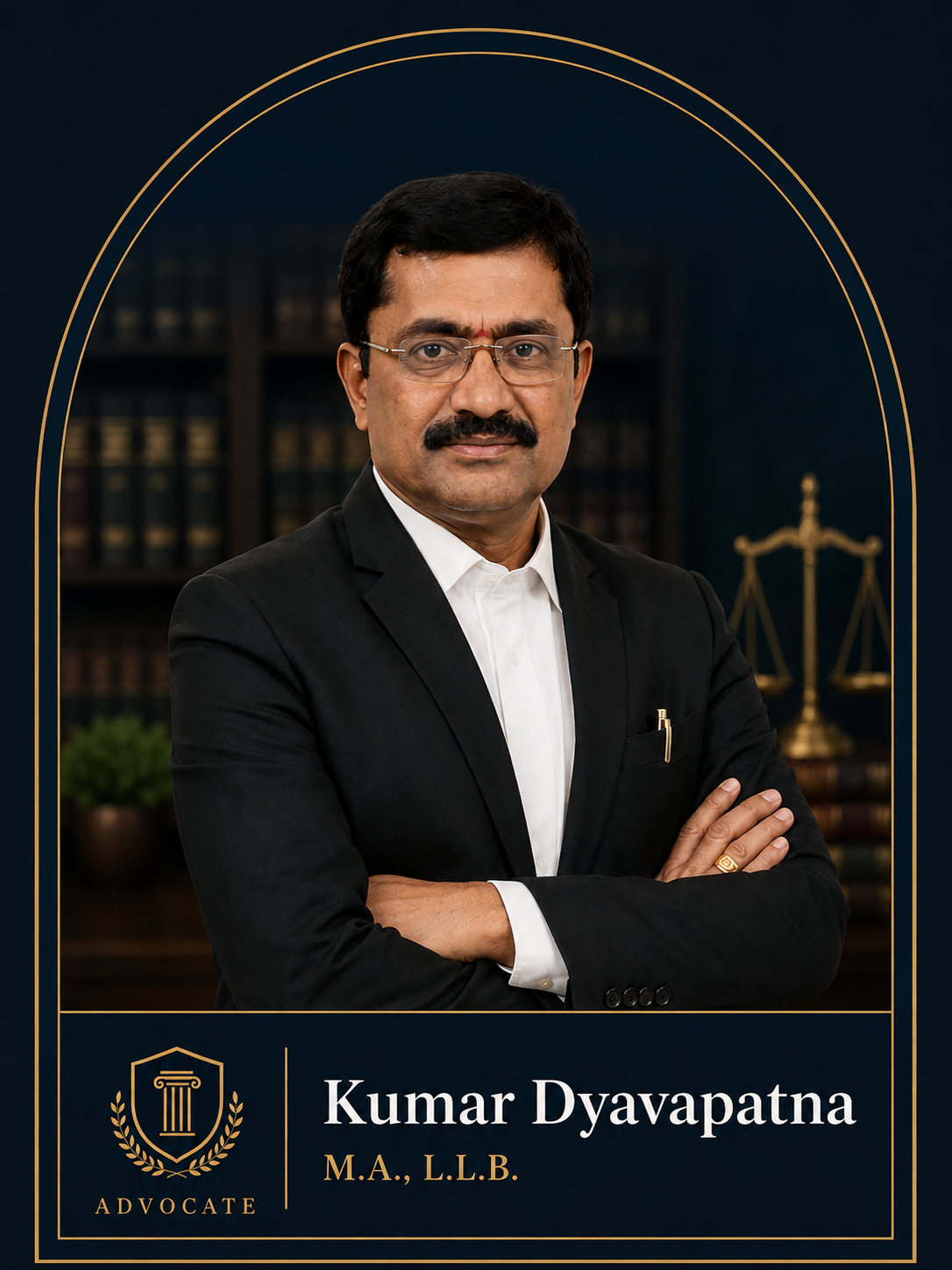
Supervised by Advocate Kumar Dyavapatna, our legal chambers in Bangalore specialize in precision drafting, tracking, and execution of Section 138 statutory notices for corporate entities, financial institutions, businesses, and individual creditors. Whether you are seeking to recover unpaid commercial dues or defending against a legally defective notice, our comprehensive guidance ensures absolute compliance. For overarching legal strategies, explore our primary cheque bounce lawyer in Bangalore portal.
Section 138 of the Negotiable Instruments Act, 1881, creates a criminal liability for the dishonour of cheques issued for the discharge, in whole or in part, of any debt or other liability. However, to prevent misuse and ensure that the drawer of the cheque is given a fair opportunity to rectify the dishonour without facing immediate criminal prosecution, the legislature embedded a mandatory procedural safeguard: the issuance of a statutory demand notice in writing within a stipulated timeframe.
The primary object of this statutory notice is twofold. First, it calls upon the drawer to make payment of the cheque amount within fifteen days of receiving the notice. Second, it serves as an official intimation establishing the foundational cause of action upon which a criminal complaint before a Magistrate can be legally instituted if the drawer fails to pay. Without issuing this notice in strict accordance with the statute, a criminal complaint filed under Section 138 is entirely non-maintainable. For comprehensive advisory on filing or defending these proceedings, consult our expert cheque bounce defense lawyer in Bangalore.
Under proviso (b) to Section 138 of the NI Act, the payee or holder in due course must make a demand for the payment of the said amount of money by giving a notice in writing, to the drawer of the cheque, within thirty days of the receipt of information by him from the bank regarding the return of the cheque as unpaid.
Calculating this 30-day window requires meticulous precision. The starting point (Day 1) is not necessarily the date printed on the bank memo, but the exact date on which the payee formally receives official intimation or the return memo from their banker. If the notice is dispatched on the 31st day or thereafter, the entire complaint becomes time-barred and vulnerable to quashing by the courts.
A legally robust Section 138 demand notice must incorporate specific factual and legal elements to withstand judicial scrutiny during trial. An ambiguous or incomplete notice can give the accused an immediate technical defense.
Drafting an impeccable notice is insufficient; proving its valid service upon the drawer is equally paramount. The law mandates that the notice must be dispatched via reliable traceable modes, predominantly Registered Post with Acknowledgement Due (RPAD) and Speed Post, supplemented by courier or electronic channels where appropriate.
Complainants must retain all original postal receipts, tracking reports downloaded from the India Post portal showing “Item Delivered,” and acknowledgment cards signed by the recipient. These documents form primary exhibits annexed to the criminal complaint filed before the Magistrate in Bangalore.
A frequent defense raised by defaulting drawers is the deliberate refusal to accept postal notices or providing incorrect residential or office addresses to evade service. The Supreme Court of India has firmly addressed this bottleneck through the doctrine of “deemed service.”
Under established precedents such as CC Alavi Haji v. Palapetty Muhammed, if a notice is sent by registered post to the correct, correctable address of the drawer and is returned with endorsements such as “refused,” “not claimed,” or “house locked,” the court will presume valid service under Section 27 of the General Clauses Act. This prevents dishonest drawers from escaping criminal liability by dodging the postman.
Once the statutory notice is served (or deemed served), the drawer is granted a statutory window of 15 days from the date of receipt to remit the payment. The cause of action to file a criminal complaint arises only on the 16th day—that is, immediately upon the expiry of the 15-day period without payment being made.
Filing a complaint before the expiry of the 15-day period renders the complaint premature and legally unsustainable. Conversely, under proviso (c) to Section 138, once the 15 days expire without payment, the complainant has a further 30 days to file the formal complaint before the jurisdictional Magistrate’s court under Section 142 of the NI Act.
Many self-drafted or poorly handled legal notices suffer from fundamental errors that lead to case dismissal at the threshold stage. Key pitfalls include:
Retaining a seasoned cheque bounce advocate in Bangalore ensures that every procedural prerequisite is meticulously fulfilled. From drafting notices with airtight legal phrasing to monitoring postal tracking numbers and compiling documentary exhibits, professional guidance eliminates procedural vulnerabilities and positions your recovery suit for success.
| Parameter | Valid Section 138 Notice | Defective / Flawed Notice |
|---|---|---|
| Issuance Timeline | Dispatched within 30 days of receiving the bank return memo. | Sent after 30 days, rendering the subsequent complaint time-barred. |
| Demand Specification | Clearly demands the exact face value of the dishonoured cheque. | Mixes unquantified damages or inflated legal costs into the core demand. |
| Service Proof | Backed by RPAD tracking reports, delivery confirmations, and affidavits. | Lacks proper tracking documentation or sent to unverified addresses. |
| Judicial Standing | Forms a bulletproof foundation for Magistrate cognizance and summons. | Liable to be challenged and dismissed at the preliminary trial stage. |
Our legal drafting and litigation strategies are anchored in authoritative Supreme Court judgments, including CC Alavi Haji v. Palapetty Muhammed (on service and notice evasion), Dashrath Rupsingh Rathod v. State of Maharashtra (on jurisdiction), and MSR Leathers v. S. Palaniappan (on multiple presentations and cause of action).
Navigating cheque bounce litigation requires uncompromising legal precision. Retaining our Bangalore chambers ensures:
You must issue and dispatch the statutory legal notice within 30 days of receiving formal intimation or the return memo from your bank regarding the dishonour of the cheque.
Under the “deemed service” doctrine established by the Supreme Court in CC Alavi Haji, if the notice is sent to the correct address and returned with endorsements like “refused” or “unclaimed,” the court presumes valid service.
Cheque bounce is primarily a civil wrong treated as a criminal offense under the Negotiable Instruments Act. A Section 138 statutory notice and private complaint before a Magistrate is the mandatory legal route, not a standard police FIR.
The accused has a statutory window of exactly 15 days from the date of receipt of the notice to clear the full cheque amount. Criminal complaints can be filed on the 16th day if payment is not received.
A specialized advocate ensures compliance with strict statutory timelines, prevents fatal drafting errors regarding debt quantification, and builds a solid evidentiary foundation for successful court proceedings.
Ensure absolute legal compliance and maximize your recovery chances. Consult Advocate Kumar Dyavapatna today for expert guidance.