Deciding to end a marriage amicably is a profound emotional step, but navigating the procedural complexities of the family courts in Bangalore requires experienced legal guidance. Under Section 13B of the Hindu Marriage Act, 1955 (and corresponding provisions under the Special Marriage Act), mutual consent divorce offers a dignified, structured, and peaceful pathway for couples seeking to separate without the hostility of protracted trials. However, drafting comprehensive joint petitions, drafting foolproof settlement agreements regarding permanent alimony, and managing child custody arrangements demand precise legal drafting to avoid future disputes.
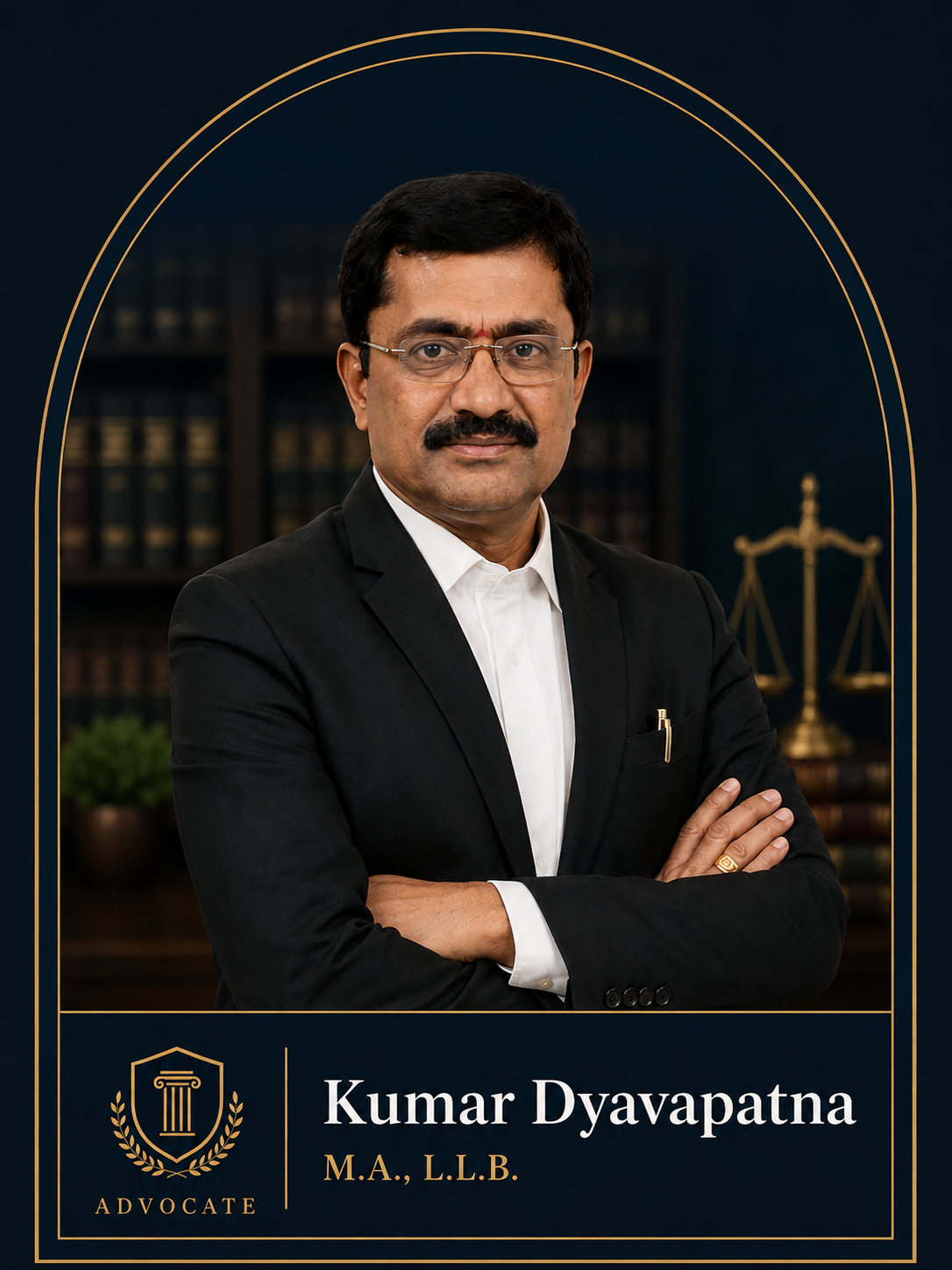
As a trusted family lawyer in Bangalore with over two decades of courtroom experience, Advocate Kumar Dyavapatna specializes in fast-tracking mutual consent petitions across the Principal Family Court, Mayo Hall, and suburban family courts. Whether you need assistance securing landmark Supreme Court cooling-off period waivers under Section 13B(2), structuring tax-efficient alimony disbursements, or finalizing visitation rights, our family litigation firm in Bangalore ensures absolute discretion, speed, and statutory compliance at every stage.
Statutory Framework of Mutual Consent Divorce in India
Dissolving a marriage by mutual consent represents the most civilized and legally sound mechanism for couples who have mutually agreed that their marriage has irretrievably broken down. Governed primarily by Section 13B of the Hindu Marriage Act, 1955—and similarly provided under Section 28 of the Special Marriage Act, 1954, for inter-caste or civil marriages—this statutory provision allows spouses to approach the family court jointly without casting allegations of matrimonial misconduct, cruelty, or adultery.
Unlike contested litigation, which can drag on for years across multiple appellate stages, a well-managed mutual consent petition focuses on closure, financial settlements, and child welfare. By eliminating adversarial cross-examinations, couples save considerable emotional energy, legal expense, and public exposure.
However, achieving a seamless decree requires absolute precision in drafting joint statements and settlement memoranda. Securing professional representation through a seasoned advocate for family cases ensures that all financial, custodial, and proprietary terms are legally binding, enforceable, and immune to future post-divorce litigation.
Planning a peaceful separation in Bangalore? Consult our expert family lawyer in Bangalore for hassle-free mutual consent filing.
Essential Legal Prerequisites Under Section 13B HMA
To successfully file and obtain a decree for mutual consent divorce before the family courts in Bangalore, parties must strictly satisfy three mandatory statutory conditions stipulated under Section 13B(1):
One Year Separate Living
The spouses must have been living separately for a continuous period of not less than one year immediately preceding the presentation of the divorce petition. Note that “living separately” does not necessarily mean living in different cities; couples can reside under the same roof provided they have completely ceased marital cohabitation and shared household duties.
Inability to Live Together
The parties must mutually agree that they are completely unable to live together and that their marital relationship has suffered an irreparable breakdown with no scope for reconciliation.
Mutual Consent on Terms
There must be complete consensus on vital ancillary issues including permanent alimony, maintenance, return of gold/stridhan, and child custody, care, and visitation rights.
Jurisdictional Nexus
The petition must be filed in the competent family court having territorial jurisdiction—where the marriage was solemnized, where the couple last resided together, or where the wife currently resides.
Legal Insight: Mutual consent cannot be forced or coerced. Family court judges carefully examine both spouses during the first motion to ensure that consent is free, voluntary, and uninfluenced by undue pressure or fraud.
03 • Fast-Track Relief
Navigating Cooling-Off Period Waivers (Amardeep Singh Principle)
Traditionally, Section 13B(2) of the Hindu Marriage Act mandates a mandatory cooling-off period of 6 months (and up to 18 months maximum) between the recording of the First Motion and the filing of the Second Motion. The legislative intent behind this waiting period was to provide couples with a final window for reconciliation.
However, in landmark judgments such as Amardeep Singh v. Harveen Kaur, the Hon’ble Supreme Court of India held that this statutory cooling-off period is directory, not mandatory. Where parties have lived separately for several years, exhausted all mediation efforts, settled all alimony claims, and where waiting longer would only prolong agony, the family court has the discretion to waive the 6-month waiting period.
As a specialized family litigation firm in Bangalore, we regularly file formal I.A. (Interlocutory Applications) seeking immediate waiver of the cooling-off period, enabling couples to secure their final decree in a matter of weeks rather than months.
04 • Court Procedure
Step-by-Step Family Court Procedure in Bangalore
Navigating the Principal Family Court in Bangalore or suburban jurisdictions like Mayo Hall and Bommanahalli involves a structured two-stage judicial process:
01
Joint Petition & Verification
Drafting and filing a joint petition signed by both spouses, accompanied by marriage photographs, wedding cards, address proofs, and detailed settlement terms.
02
First Motion & Statement Recording
Appearance before the Family Court Judge where statements of both parties are recorded under oath, and counseling or reconciliation is formally attempted.
03
Cooling-Off / Waiver Motion
Waiting out the statutory 6-month period or obtaining an immediate judicial waiver based on compelling grounds and settled financial terms.
04
Second Motion & Final Decree
Re-affirming mutual consent, completing final alimony payments, and obtaining the certified decree of divorce dissolving the marriage.
The cornerstone of a successful mutual consent divorce is a meticulously drafted Memorandum of Understanding (MoU) or Settlement Deed. Ambiguity in financial terms or property relinquishments is the leading cause of post-divorce disputes.
Our legal team ensures that every settlement agreement covers:
Lump-Sum Alimony or Installments: Precise timelines for bank transfers, Demand Draft (DD) handovers, or digital payments, specifying whether payments are tied to the first or second motion.
Return of Stridhan & Valuables: Itemized inventories of gold jewelry, wedding gifts, electronic gadgets, and personal belongings returned reciprocally.
Mutual Quashing of Criminal Cases: Explicit clauses binding both parties to withdraw and cooperate in quashing any pending 498A, domestic violence, or maintenance cases.
Complete Civil Immunity: Clauses barring either party from claiming future shares in ancestral or self-acquired properties.
Need expert assistance drafting a bulletproof alimony and settlement agreement in Bangalore? Connect with our family lawyer in Bangalore.
Child Custody, Welfare & Visitation Rights Integration
When children are involved, mutual consent divorce requires prioritizing the child’s emotional, educational, and financial welfare above all else. Under Indian family law, the welfare of the child is always treated as the paramount consideration by the court.
The settlement deed must clearly define:
Primary Physical Custody: Which parent the child will primarily reside with and attend school under.
Structured Visitation Rights: Specific timelines for weekend access, overnight stays, holiday sharing, and video call interactions for the non-custodial parent.
Quadrants of Educational and Medical Expenses: Clear allocation of school tuition fees, medical insurance, extracurricular costs, and higher education funds between both parents.
Integrating these terms into the court decree ensures enforceable child custody arrangements without triggering future custody battles.
07 • NRI Representation
NRI Mutual Consent Divorce via Video Conferencing
Bangalore is home to a large diaspora of Non-Resident Indians (NRIs) working in the IT, corporate, and healthcare sectors across the US, UK, Europe, Canada, and the UAE. Often, couples residing abroad face marital breakdown but find it difficult to travel back to India for prolonged court hearings.
The Karnataka High Court and Supreme Court have repeatedly recognized the validity of recording statements and conducting family court proceedings via secure video conferencing for NRI spouses. Working with an experienced advocate for family cases allows NRI clients to execute Special Power of Attorneys (SPA), complete notarizations and apostilles through Indian embassies abroad, and finalize their mutual consent divorce seamlessly without disrupting their employment overseas.
08 • Risk Mitigation
Common Pitfalls & Mistakes to Avoid During Separation
Even in amicable separations, minor oversights can result in petition rejections or post-divorce legal battles. Couples should avoid these common mistakes:
Vague Alimony Clauses: Failing to specify tax deductions or exact payment modes, leading to execution disputes.
Ignoring Pending Criminal Complaints: Forgetting to include clauses for quashing 498A or maintenance cases, leaving parties vulnerable to ongoing police scrutiny.
Incomplete Stridhan Inventories: Not recording a signed receipt acknowledging the return of all gold and valuables.
Premature Relocation: Relocating with children across state or international borders without explicit judicial consent or parental agreement.
09 • Conciliation & Mediation
Role of Mediation & Amicable Out-of-Court Resolutions
Before approaching the court or during the pendency of matrimonial disputes, professional mediation plays a transformative role. The Bangalore Mediation Center (BMC) attached to the High Court of Karnataka and various family court mediation units provide structured environments where trained mediators help couples bridge communication gaps.
Opting for pre-litigation mediation allows couples to iron out emotional grievances, negotiate fair alimony structures, and draft comprehensive settlement terms before filing a joint petition, saving months of court visits and emotional distress.
10 • Comparative Matrix
Comparative Matrix: Mutual Consent vs. Contested Divorce
Parameter
Mutual Consent Divorce
Contested Divorce
Legal Basis
Section 13B HMA / Section 28 SMA
Section 13(1) HMA (Cruelty, Desertion, Adultery)
Average Timeframe
1 to 3 Months (Faster with waiver)
2 to 5+ Years across trial and appellate courts
Nature of Proceedings
Cooperative, amicable, joint petition
Adversarial trial, cross-examination, hearings
Emotional & Financial Cost
Low emotional stress, predictable legal expenses
High emotional toll, extensive litigation costs
Outcome Predictability
High (Terms agreed upon beforehand)
Unpredictable (Dependent on judicial appreciation of evidence)
11 • Specialized Counsel
Why Consult Advocate Kumar Dyavapatna for Family & Divorce Litigation
Navigating matrimonial dissolution requires empathy, absolute discretion, and flawless execution.
23+ Years of Family Law Mastery: Extensive courtroom experience across Bangalore’s family courts and high court.
Expertise in Cooling-Off Waivers: Proven success in securing rapid Supreme Court/High Court waivers under the Amardeep Singh precedent.
Seamless NRI & Remote Representation: Managing cross-border divorces and video conferencing hearings with precision.
12 • Clear Answers
Frequently Asked Questions (FAQs)
What is the minimum separation period required for mutual consent divorce in India?
Under Section 13B of the Hindu Marriage Act, couples must have lived separately for a continuous period of not less than one year prior to filing the joint petition.
Can the mandatory 6-month cooling-off period be waived by the family court?
Yes. Based on Supreme Court precedents, the court can waive the 6-month waiting period if parties have settled all issues, lived apart for years, and reconciliation is impossible.
What happens if one spouse backs out or withdraws consent before the final decree?
Mutual consent requires continuous willingness from both spouses until the final decree. If one spouse withdraws consent unilaterally, the mutual petition cannot be decreed and converts into contested litigation.
Can NRI couples living abroad get a mutual consent divorce in Bangalore?
Yes. NRI couples can file in Bangalore if jurisdiction is met, and statements can be recorded via secure video conferencing, reducing the need for multiple international travels.
How does a lawyer help in mutual consent divorce proceedings?
An expert lawyer drafts watertight settlement agreements, handles court filings, files cooling-off waiver motions, and ensures all criminal and civil claims are formally resolved.
Begin Your Journey Toward Peaceful Closure With Expert Legal Guidance
If you and your spouse are seeking a dignified, amicable separation through mutual consent divorce in Bangalore, consult Advocate Kumar Dyavapatna today for fast-track drafting, cooling-off waivers, and comprehensive settlement support.
◆ Bar Council Verified◆ 23+ Years Experience◆ 2000+ Cases Handled◆ Karnataka High Court Practice◆ Family Court Bengaluru◆ Confidential Consultation◆ Response Within 30 Minutes◆ English • Hindi • Kannada◆ Bar Council Verified◆ 23+ Years Experience◆ 2000+ Cases Handled◆ Karnataka High Court Practice◆ Family Court Bengaluru◆ Confidential Consultation◆ Response Within 30 Minutes◆ English • Hindi • Kannada