
Is a mediated settlement legally binding in India?
Yes. Settlement agreements arrived at through formal mediation carry the same legal enforceability as a civil court decree under Indian law.
When civil disputes arise—whether concerning family partition, commercial contracts, property boundaries, or partnership disagreements—parties frequently assume that filing a lawsuit is the only remedy. However, traditional courtroom litigation can involve years of procedural delays, mounting expenses, and adversarial strain. Alternative Dispute Resolution (ADR) mechanisms like mediation offer a structured, confidential, and cooperative pathway to resolution.
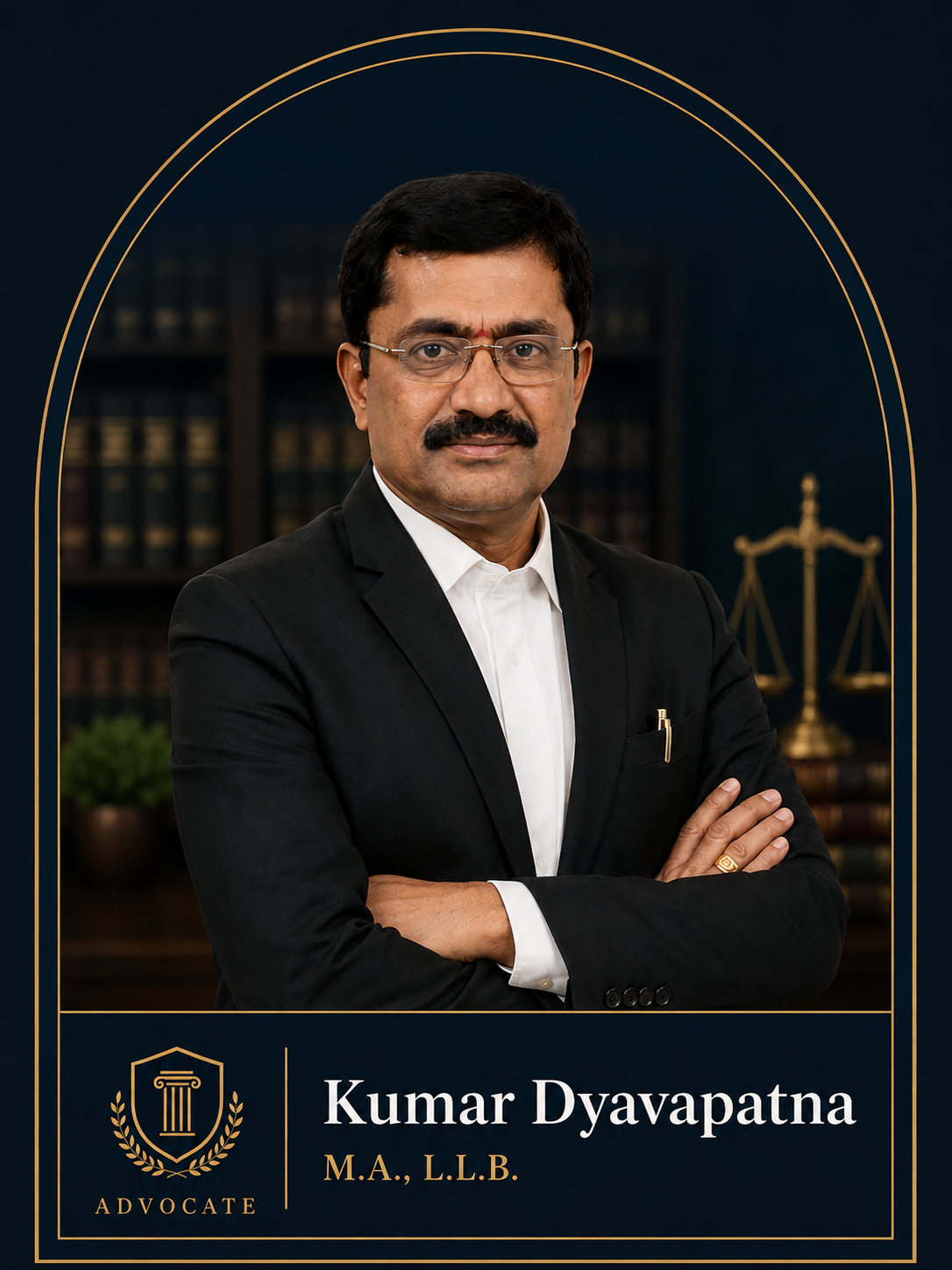
Backed by over 23 years of trial advocacy across the Karnataka High Court or Bangalore Civil Courts, Advocate Kumar Dyavapatna helps clients evaluate when to litigate and when professional Mediation service is the superior strategic choice. This guide provides an in-depth comparison of both forums to help you make an informed decision.
Mediation is a voluntary, confidential, and structured dispute resolution process where a neutral third party (the mediator) facilitates communication between conflicting parties. Unlike a judge or arbitrator, the mediator does not impose a verdict or decide who wins or loses. Instead, they guide participants toward crafting their own mutually acceptable settlement agreement.
In Bengaluru’s bustling civil ecosystem, mediation offers a welcome alternative to overcrowded court dockets. Whether utilized privately or referred by the court under Section 89 of the Code of Civil Procedure (CPC), mediation empowers individuals to resolve disputes amicably. Consulting an experienced civil advocate in Bangalore ensures you enter mediation with a clear legal strategy.
Litigation is the formal process of resolving disputes through the public court system. It involves filing plaints, written statements, framing of issues, cross-examination of witnesses, oral arguments, and final judicial judgments.
While litigation provides an authoritative, binding judicial verdict backed by the coercive power of the state, it is inherently adversarial. Trials can take years, involve rigid procedural rules, and expose sensitive personal or commercial details in public court records.
Reviewing the structural differences between mediation and court trials helps clarify which path aligns best with your objectives:
| Feature | Mediation | Court Litigation |
|---|---|---|
| Decision Maker | The parties themselves (facilitated by a mediator). | A judge who delivers a binding verdict. |
| Timeframe | Weeks to a few months. | Several years across trial and appellate courts. |
| Confidentiality | Strictly private and confidential. | Public court records and open hearings. |
| Nature of Process | Collaborative, problem-solving approach. | Adversarial, win-lose contest. |
| Cost Impact | Significantly lower legal and administrative costs. | High cumulative expenses over prolonged trials. |
Mediation is exceptionally effective in specific scenarios where maintaining relationships or preserving privacy is paramount:
Despite its many benefits, mediation requires willingness and good faith from both sides. Court litigation is necessary when:
One of mediation’s greatest strengths is control. In court, you surrender final decision-making power to a judge who applies rigid legal principles to your dispute. In mediation, you retain total control over the outcome.
Furthermore, mediation sessions are legally confidential. Discussions, admissions, or proposals made during mediation cannot be used as evidence in court if the mediation fails, providing a safe environment for honest negotiation.
Entering mediation does not mean discarding legal counsel. An experienced advocate is vital during mediation to protect your legal rights, assess settlement proposals objectively, and draft legally binding settlement agreements that can be recorded in court.
For property or contractual disputes in Bengaluru, consulting a specialized property lawyer in Bangalore ensures that any mediated settlement regarding land or assets is legally airtight.
Mediation has received robust legislative backing in India. Beyond Section 89 of the CPC and the Arbitration and Conciliation Act, the enactment of the **Mediation Act** formalizes institutional mediation as a primary dispute resolution mechanism.
Settlement agreements reached through formal mediation hold the same legal status and enforceability as a decree of a civil court, giving parties absolute security and peace of mind.
Financial and emotional exhaustion are common byproducts of multi-year court battles. Mediation condenses what could be a five-year courtroom ordeal into a few focused sessions spanning weeks.
By slashing legal fees, court expenses, and lost productivity, mediation preserves financial resources, allowing both parties to move forward constructively rather than draining their capital on litigation.
Choosing the right path between mediation and litigation requires professional guidance tailored to the nuances of your case. Advocate Kumar Dyavapatna offers expert advisory services across Bengaluru.
Whether you seek out-of-court settlement through dedicated Mediation or robust trial representation before the Karnataka High Court or Bangalore Civil Courts, professional representation ensures your interests are vigorously protected.
Yes. Settlement agreements arrived at through formal mediation carry the same legal enforceability as a civil court decree under Indian law.
Absolutely. Mediation is entirely voluntary; if parties fail to reach an agreement, they retain full rights to pursue courtroom litigation.
While not strictly mandatory, having an experienced civil lawyer in Bangalore by your side ensures your legal rights are protected and settlement terms are properly drafted.
Mediation usually concludes within a few weeks or months, whereas traditional civil litigation in India can span several years.
Yes. All statements, offers, and admissions made during mediation are strictly confidential and inadmissible as evidence in court.
Whether through efficient out-of-court mediation or robust courtroom litigation, get expert legal counsel from Advocate Kumar Dyavapatna.