Educational Institutions & Article 12 State Litigation Lawyer in Bangalore
Constitutional Law • Article 12 State Litigations • Autonomous Bodies
Educational Institutions, Autonomous Bodies & Article 12 “State” Litigation Lawyer in Bangalore
Challenging Arbitrary Actions, Unreasonable Fee Hikes, Institutional Disaffiliations, and Discriminatory Policies by Universities, Statutory Boards, and Public Sector Undertakings
Article 12 of the Constitution of India expands the definition of the “State” to include not only the executive and legislature of the Union and the States, but also all local or other authorities within the territory of India or under the control of the Government. This expansive constitutional provision serves as the primary gateway for citizens, students, educational institutions, faculty members, and corporate entities to invoke extraordinary writ jurisdiction under Article 226 against arbitrary, capricious, or discriminatory actions by autonomous bodies, statutory universities, and public sector undertakings.
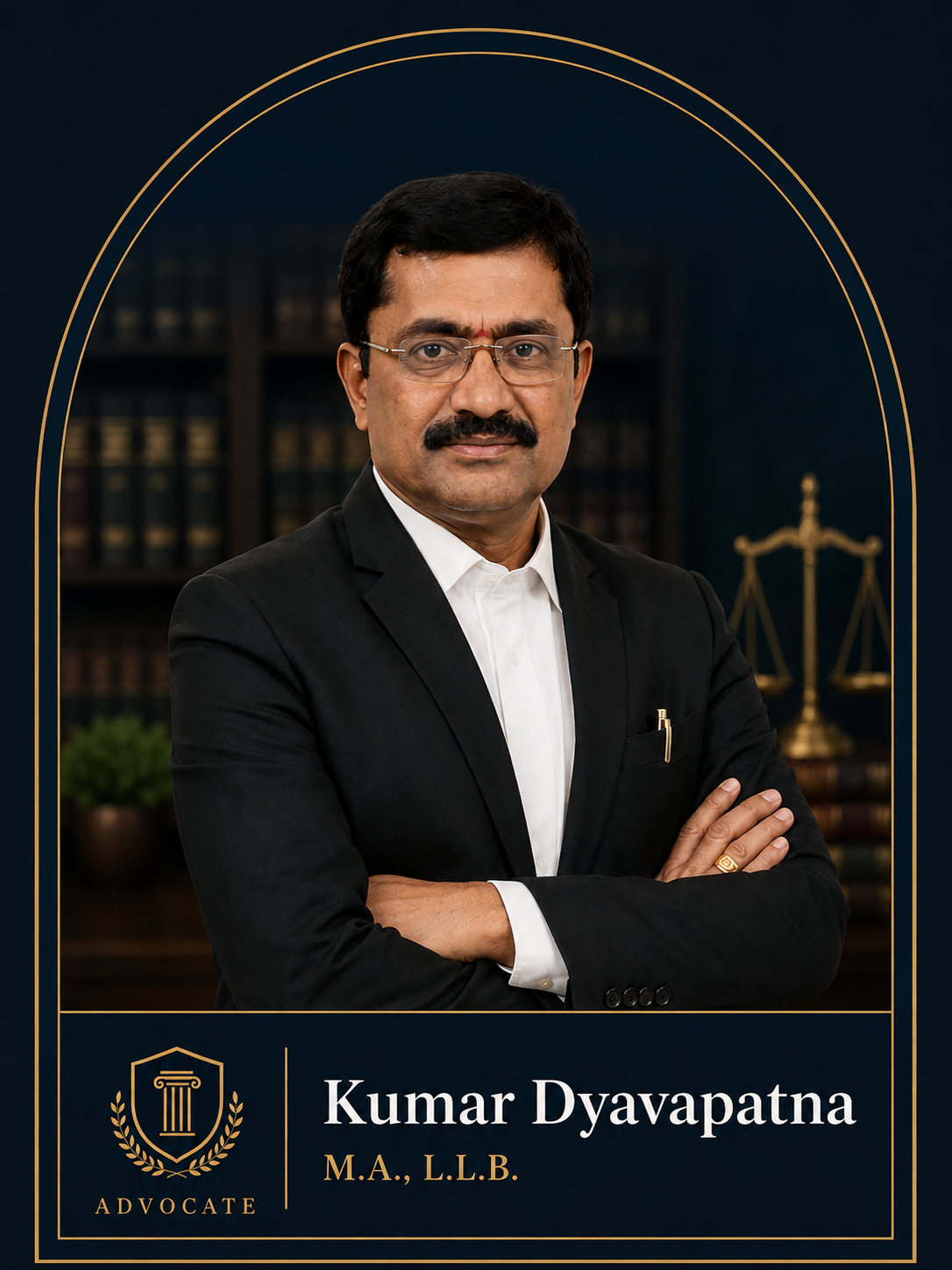
Under the expert legal direction of Advocate Kumar Dyavapatna, our Bangalore-based practice provides robust, high-stakes constitutional litigation support. Whether you are an educational institution fighting illegal disaffiliation and arbitrary quota impositions, a student challenging unfair university regulations and exorbitant fee hikes, or an employee confronting unconstitutional service termination by a public sector board, working with a premier constitutional law specialist in Bangalore is indispensable to enforcing your fundamental and statutory rights.
☎9844546768⚖Article 12 State Litigation Practice✓23+ Years High Court & Supreme Court Advocacy
23+ YearsConstitutional Law Experience
Article 12 & 226Writ Jurisdiction Expertise
Universities & PSUsAutonomous Body Defense
High Court& Supreme Court Litigation
01 • Constitutional Scope
Decoding Article 12: What Qualifies as “State” Instrumentalities?
Article 12 of the Constitution of India provides an inclusive definition of the term “State,” stating that unless the context otherwise requires, the State includes the Government and Parliament of India and the Government and the Legislature of each of the States and all local or other authorities within the territory of India or under the control of the Government of India.
Through a long line of path-breaking judicial interpretations by the Supreme Court of India—beginning with landmark cases like Sukhdev Singh v. Bhagatram and Ramana Dayaram Shetty v. International Airport Authority—the phrase “other authorities” has been interpreted to encompass corporate bodies, government companies, statutory boards, universities, and public institutions that perform public functions or receive deep financial and administrative control from the government.
Establishing that an institution qualifies as an instrumentality of the State under Article 12 is the foundational cornerstone for invoking constitutional remedies against discriminatory practices, arbitrary fee hikes, or unilateral regulatory cancellations. Partnering with an accomplished constitutional lawyer in Bangalore ensures that your litigation is grounded on unshakeable jurisdictional precedents.
Educational institutions—including engineering colleges, medical institutes, nursing schools, and universities operating across Karnataka—frequently find themselves subjected to arbitrary withdrawal of affiliation, sudden denial of course approvals, discriminatory seat-matrix allocations, and politically motivated inspections by statutory regulators like AICTE, NMC, UGC, and state universities.
When statutory bodies act in violation of statutory rules, fail to adhere to principles of natural justice, or impose impossible compliance burdens without adequate notice, educational managements have a direct constitutional recourse. Our chambers specialize in challenging arbitrary disaffiliation orders, revocation of institutional recognitions, and punitive administrative sanctions before the High Court of Karnataka.
The regulation of fee structures in professional and higher education by state-appointed committees and university syndicates often intersects with complex questions of institutional autonomy, cost-recovery, and student welfare. Conversely, students and parent associations frequently contest exorbitant, unjustified fee hikes imposed by state-funded or deemed universities operating under Article 12 oversight.
We represent both educational trusts seeking protection against arbitrary fee caps that undermine operational viability, and student bodies challenging unreasonable commercial exploitation by public-backed institutions, ensuring strict adherence to constitutional standards of fairness and reasonableness.
04 • PSUs & Autonomous Bodies
Public Sector Undertakings (PSUs) & Autonomous Board Litigations
Beyond educational institutions, a vast array of statutory boards, public sector corporations, municipal authorities, and research bodies operate as instrumentalities of the State. These entities often engage in arbitrary commercial blacklisting, unilateral termination of public tenders, discriminatory allotment of industrial land, and breach of statutory contracts.
Because these public bodies are bound by the public law norm of non-arbitrariness under Article 14 of the Constitution, their commercial and administrative decisions are fully amenable to judicial review. We challenge arbitrary tender cancellations, unfair blacklisting orders, and contractual high-handedness by PSUs and autonomous boards.
Dealing with arbitrary blacklisting, tender cancellation, or policy discrimination by a public sector undertaking or statutory board? Speak with a premier constitutional litigator in Bangalore.
Writ Jurisdiction Under Article 226: Principles of Judicial Review
Article 226 of the Constitution empowers High Courts to issue writs—including Habeas Corpus, Mandamus, Prohibition, Quo Warranto, and Certiorari—to any person or authority, including any government, within their territorial jurisdiction. This extraordinary writ jurisdiction is the primary legal mechanism to correct administrative excesses committed by Article 12 State bodies.
Unlike ordinary civil suits that are bound by protracted procedures, writ petitions offer an expeditious remedy when a public authority breaches fundamental rights or statutory duties. We craft meticulously researched writ petitions designed to secure immediate judicial intervention against administrative lawlessness.
06 • Procedural Fairness
Violations of Natural Justice & Arbitrary Administrative Action
A hallmark of Article 12 State action is the mandatory requirement to act fairly, transparently, and in accordance with the principles of natural justice (audi alteram partem—the right to a fair hearing). When universities, statutory boards, or public corporations pass adverse orders without issuing show-cause notices, denying access to foundational documents, or acting under external dictation, such actions are void ab initio.
We challenge administrative decisions infected by procedural impropriety, mala fides, irrelevant considerations, and failure to provide reasoned orders before the High Court of Karnataka.
07 • Employment & Service Law
Service Matters, Tenure & Employment Disputes in State Bodies
Professors, administrative personnel, researchers, and public sector employees working in universities, autonomous research institutes, and statutory corporations enjoy constitutional protections against arbitrary termination, supersession in promotions, and discriminatory disciplinary inquiries.
We represent institutional employees in challenging wrongful dismissals, illegal suspensions, departmental bias, and arbitrary retirement or tenure denials by Article 12 authorities.
08 • Urgent Interim Reliefs
Securing Urgent Interim Injunctions and Stay Orders
In institutional and educational litigation, timing is critical. An unexecuted disaffiliation order, sudden student intake reduction, or arbitrary tender forfeiture can inflict fatal, irreversible financial and reputational damage within days.
Our practice excels at moving the High Court for urgent interim stays, status quo orders, and protective injunctions to halt coercive executive enforcement while substantive writ petitions are adjudicated on merits.
09 • Comparative Analysis
Comparative Matrix: Private Entities vs. Article 12 State Bodies
Legal Parameter
Private Entities (Non-State)
Article 12 “State” Bodies & Universities
Writ Jurisdiction (Art. 226)
Generally not maintainable unless discharging strict public duties
Fully maintainable for enforcement of fundamental and statutory rights
Standard of Fairness
Governed primarily by private contract law and civil remedies
Bound by Article 14 (prohibition of arbitrariness) and public law standards
Natural Justice
Contractual terms govern grievance redressal
Mandatory constitutional requirement of fair hearing and reasoned orders
Regulatory Oversight
Subject to general statutory compliance
Subject to rigorous judicial review of administrative discretion
10 • Judicial Precedents
Landmark Supreme Court Rulings on Article 12 Instrumentalities
Our legal strategies draw directly upon foundational Supreme Court jurisprudence, including Ajay Hasia v. Khalid Mujib, Zoroastrian Co-operative Housing Society v. District Registrar, Board of Control for Cricket in India v. Cricket Association of Bihar, and St. Xavier’s College v. State of Gujarat.
These landmark rulings establish the modern tests for determining state instrumentality, financial deep control, and public duty doctrine, ensuring maximum legal leverage for our clients.
11 • Professional Expertise
Why Consult an Expert Article 12 Litigator in Bangalore
Litigating against statutory bodies, universities, and autonomous public entities demands specialized constitutional proficiency and rigorous advocacy:
23+ Years of High Court Experience: Proven expertise in formulating unassailable writ petitions and handling complex institutional disputes in Bangalore.
Deep Mastery of Administrative Law: Comprehensive command over Article 12 jurisprudence, public sector regulations, and educational law.
Urgent Interim Protection: Exceptional track record in securing immediate stays and protective orders against arbitrary executive action.
Client-Centric Strategic Defense: Tailored legal strategies designed to safeguard institutional reputations, educational viability, and individual professional rights.
12 • Clear Answers
Frequently Asked Questions (FAQs)
What is Article 12 of the Constitution of India and why is it important?
Article 12 defines what constitutes the “State,” including government bodies, local authorities, statutory corporations, and educational instrumentalities. It allows citizens and institutions to file writ petitions under Article 226 for violation of constitutional rights.
Can private educational institutions or deemed universities be treated as “State”?
Yes, if they perform vital public functions, receive substantial state financial aid, or operate under pervasive governmental regulation and administrative control.
How can an arbitrary disaffiliation order by a university be challenged?
An arbitrary disaffiliation order can be challenged via a writ petition under Article 226 before the High Court of Karnataka on grounds of violation of natural justice, mala fides, and statutory non-compliance.
Are commercial decisions of Public Sector Undertakings (PSUs) subject to judicial review?
Yes. Even in commercial contracts and tender matters, PSUs are bound by Article 14 and cannot act arbitrarily, discriminatorily, or unreasonably.
Why should I hire a specialized constitutional lawyer for Article 12 litigation?
Article 12 and writ jurisdiction involve intricate constitutional doctrines, locus standi rules, and administrative law principles that require seasoned High Court advocacy.
Facing Arbitrary Actions, Disaffiliation, or Policy Discrimination by a State Body or University?
Protect your institutional and professional rights. Consult Advocate Kumar Dyavapatna today for elite constitutional representation in Article 12 litigations across Karnataka.
◆ Bar Council Verified◆ 23+ Years Experience◆ 2000+ Cases Handled◆ Karnataka High Court Practice◆ Family Court Bengaluru◆ Confidential Consultation◆ Response Within 30 Minutes◆ English • Hindi • Kannada◆ Bar Council Verified◆ 23+ Years Experience◆ 2000+ Cases Handled◆ Karnataka High Court Practice◆ Family Court Bengaluru◆ Confidential Consultation◆ Response Within 30 Minutes◆ English • Hindi • Kannada