Section 138 NI Act • Accused Defense • Legal Strategy
Comprehensive Defense Strategies in Section 138 Cases for Accused Parties
Rebutting Statutory Presumptions Under Section 139, Proving No Legally Enforceable Debt, Security Cheque Misuse, and Material Alteration Defenses in Bangalore Courts
Facing a criminal prosecution under Section 138 of the Negotiable Instruments Act can be an overwhelming experience for any individual or corporate entity. Because the statute incorporates powerful statutory presumptions that initially favor the complainant, many defendants assume conviction is inevitable. However, Indian jurisprudence provides robust, highly effective legal defenses designed to dismantle frivolous or exaggerated claims and secure complete acquittal.
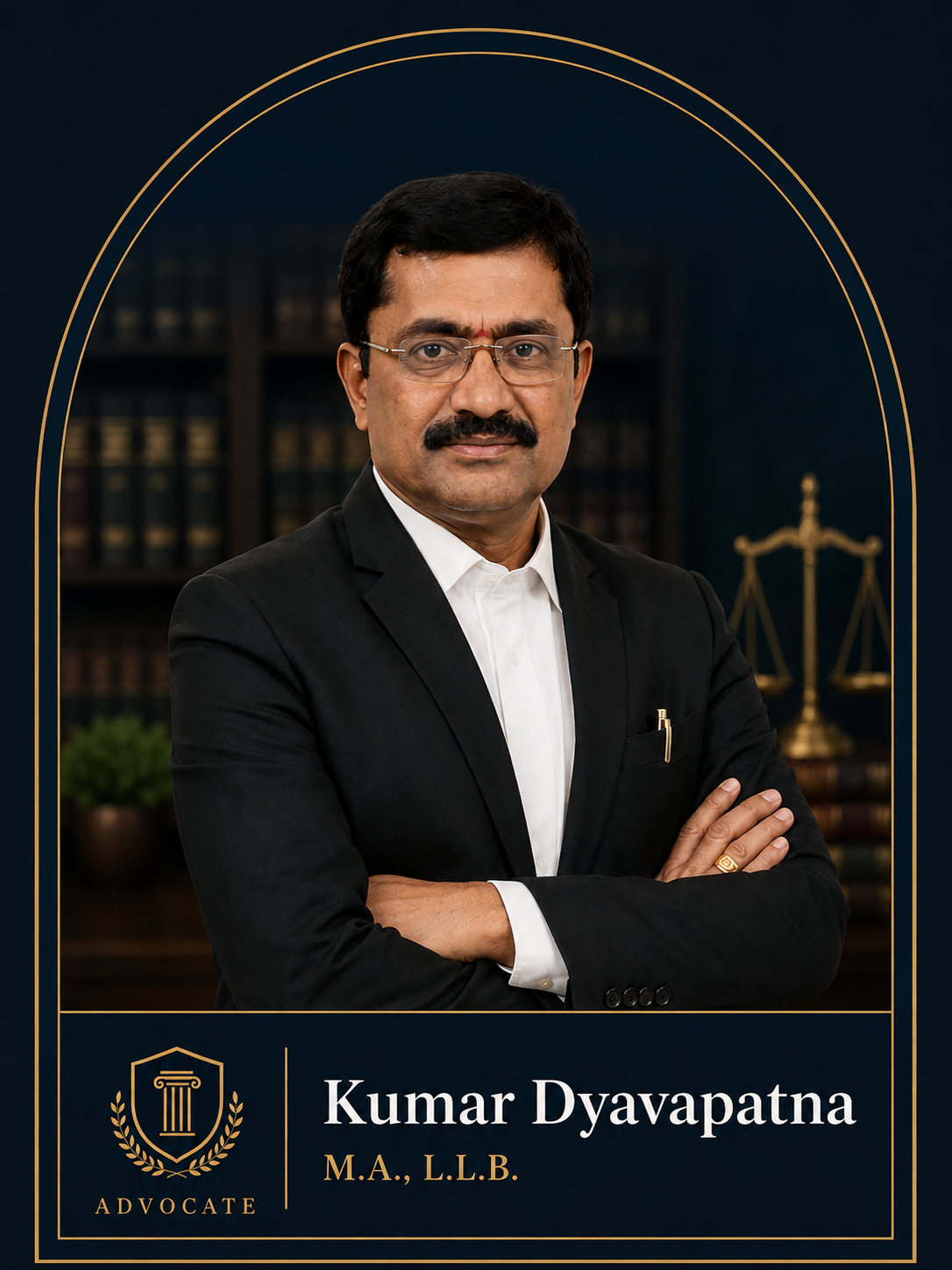
Under the expert guidance of Advocate Kumar Dyavapatna, our Bangalore legal defense practice specializes in systematically rebutting Section 139 presumptions, exposing the misuse of security cheques, challenging blank instrument fillings, and establishing the complete absence of a legally enforceable debt. To review our broad array of criminal defense and civil recovery services, please visit our primary cheque bounce lawyer in Bangalore portal.
☎9844546768⚖Bangalore Trial Defense Specialist✓Proven Track Record of Acquittals
Section 139Rebuttable Presumptions
PreponderanceStandard of Proof for Accused
Security ChequesMisuse & Cover Defense
23+ YearsTrial Court Expertise
01 • Statutory Presumptions
Understanding the Anatomy of Section 139 Statutory Presumptions
The cornerstone of a Section 138 prosecution is Section 139 of the Negotiable Instruments Act, which mandates that unless the contrary is proved, the court shall presume that the holder of a cheque received the cheque of the nature referred to in Section 138 for the discharge, in whole or in part, of any debt or other liability.
While this presumption places an initial evidentiary burden on the accused, apex court rulings have repeatedly clarified that this presumption is rebuttable and not absolute. The accused is not required to establish their innocence beyond a reasonable doubt—a standard reserved for criminal prosecution—but only needs to raise a probable defense that creates serious doubt regarding the existence of a legally enforceable debt. For comprehensive legal support, consult our primary cheque bounce defense lawyer in Bangalore.
Facing a false Section 139 presumption in Bangalore courts? Consult senior defense counsel Advocate Kumar Dyavapatna.
Rebutting Presumptions on the Standard of Preponderance of Probabilities
A fundamental tenet of Indian criminal jurisprudence in cheque bounce litigation is that the standard of proof required from an accused to rebut the Section 139 presumption is preponderance of probabilities. The accused can discharge this burden by cross-examining the complainant, pointing out inherent contradictions in their pleadings, or leading independent defense evidence.
If the accused successfully shifts the evidentiary burden back onto the complainant, the onus returns to the complainant to prove their case beyond a reasonable doubt, including proving financial capacity and the actual existence of the loan or commercial transaction.
03 • No Legally Enforceable Debt
Proving “No Legally Enforceable Debt or Liability”
Section 138 applies exclusively to cheques issued for the discharge of a “legally enforceable debt or liability.” If the underlying transaction is void ab initio, illegal, barred by the law of limitation, or based on gambling or wagering contracts, no offense is made out.
Key arguments under this defense include proving that the debt was already repaid in cash or via bank transfer (supported by ledger extracts, WhatsApp chats, or receipt acknowledgments), or demonstrating that the time-barred debt cannot form the basis of a valid Section 138 complaint.
04 • Security Cheque Defense
The Security Cheque Defense and Unenforceable Guarantees
One of the most frequently abused practices by creditors is presenting blank signed cheques that were originally handed over purely as security for a business contract, lease agreement, or friendly accommodation.
Under established legal precedent, a security cheque cannot be presented for encashment unless a specific default occurs under the primary agreement and the debt crystallizes into an enforceable liability. If the primary contract was fulfilled, terminated, or novated, presenting a security cheque constitutes misuse and provides a complete defense against criminal liability.
Was your security cheque misused by a creditor or financier in Bangalore? Connect with an expert litigation strategist.
Blank Cheque Defense and Unauthorized Filling of Particulars
Under Section 20 of the Negotiable Instruments Act, if a person signs and delivers a blank or partly filled stamped paper or cheque, it confers prima facie authority upon the holder to fill up the incomplete instrument. However, this does not grant the holder blanket permission to insert arbitrary amounts, inflated figures, or fabricated dates that bear no nexus to the actual transaction.
During cross-examination, our defense team meticulously exposes discrepancies in handwriting, ink color variations, and formatting anomalies to prove that the amount filled in the cheque was unauthorized and excessive.
06 • Material Alteration
Material Alteration of Instruments Under Section 87 NI Act
Section 87 of the NI Act dictates that any material alteration of a negotiable instrument renders the instrument void against anyone who is not a party to such alteration. If the complainant or an intermediary alters the date, amount, payee name, or crossing without the express consent of the drawer, the instrument loses its legal validity, resulting in the immediate dismissal of the complaint.
07 • Financial Capacity
Challenging the Financial Capacity of the Complainant to Lend
In cash-loan allegations, a powerful defense weapon is challenging the financial capacity of the complainant. If the complainant alleges advancing a massive cash loan of several lakhs without possessing declared taxable income, bank account withdrawals, or matching balance sheet entries, the defense successfully questions how such an advance could have been made.
Apex court rulings affirm that when the accused questions the financial capacity of the lender, the burden shifts back to the complainant to prove their source of funds.
08 • Notice Defects
Procedural Flaws and Statutory Demand Notice Defects
A Section 138 complaint is legally defective if the mandatory statutory demand notice suffers from terminal flaws. Common notice-level defenses include:
Demand Exceeding Actual Debt: Demanding an inflated amount that includes arbitrary interest or unrelated past dues not covered by the cheque.
Defective Service: Proving that the notice was sent to an incorrect or obsolete address and never actually served upon the accused.
Premature Filing: Instituting the complaint before the expiry of the mandatory 15-day payment window following notice receipt.
09 • Comparative Analysis
Comparative Matrix: Complainant Claims vs. Accused Defense Strategy
Complainant’s Claim
Accused’s Counter-Strategy
Legal Basis / Precedent
Cheque was issued for a running business loan.
Prove cheque was handed over solely as unexecuted security.
Section 138 NI Act / Supreme Court Security Cheque Rulings.
Full loan amount was advanced in cash.
Challenge financial capacity and lack of income tax disclosure.
Basalingappa v. Mudibasappa (SC).
Notice was duly served at the correct address.
Expose wrong postal tracking, incorrect address, or refusal due to non-residence.
Section 27 General Clauses Act.
Amount filled in cheque is legally binding.
Demonstrate unauthorized filling of blank instrument and material alterations.
Our defense strategies are anchored in landmark apex court judgments such as Basalingappa v. Mudibasappa, Vijay v. Laxman, Dashrath Rupsingh Rathod, and Kumar Exports v. Sharma Carpets, which establish that the accused can successfully rebut Section 139 presumptions through robust cross-examination and preponderance of probabilities.
11 • Professional Expertise
Why Retain Advocate Kumar Dyavapatna for Your Defense
Defending a Section 138 criminal case in Bangalore requires sharp analytical skills, meticulous document examination, and aggressive trial advocacy. Retaining our chambers ensures:
23+ Years of Trial Defense Experience: Deep familiarity with Bangalore Magistrate courts and prosecution tactics.
Strategic Cross-Examination: Deft dismantling of complainant testimonies and exposure of financial discrepancies.
Customized Defense Blueprints: Tailored strategies covering security cheque misuse, financial incapacity, and material alterations.
Uncompromising Commitment: Dedicated legal representation focused on securing complete acquittal and safeguarding your reputation.
12 • Clear Answers
Frequently Asked Questions (FAQs)
Can I be convicted if I signed a blank cheque given as security?
Not necessarily. While a signature creates a presumption, you can rebut it by proving that the cheque was given as security and that no enforceable debt existed at the time of presentation.
What is the standard of proof required for an accused in a cheque bounce case?
The accused is only required to prove their defense on a preponderance of probabilities, not beyond a reasonable doubt, by creating reasonable doubt in the complainant’s case.
Can I challenge the complainant’s financial capacity to lend money?
Yes. If the complainant cannot prove their source of funds or income tax disclosures for a large loan, the court may draw an adverse inference in your favor.
What happens if the statutory demand notice demands an incorrect amount?
Demanding an inflated amount that includes unauthorized interest or extraneous dues can render the legal notice invalid, providing a strong defense against the complaint.
Why should I hire Advocate Kumar Dyavapatna for my defense in Bangalore?
With over 23 years of trial advocacy experience in Bangalore, Advocate Kumar Dyavapatna provides robust, strategic defense representation designed to achieve acquittals.
Facing a Cheque Bounce Case in Bangalore? Build Your Defense Today.
Do not let Section 139 presumptions intimidate you. Secure experienced legal defense and protect your rights with Advocate Kumar Dyavapatna.
◆ Bar Council Verified◆ 23+ Years Experience◆ 2000+ Cases Handled◆ Karnataka High Court Practice◆ Family Court Bengaluru◆ Confidential Consultation◆ Response Within 30 Minutes◆ English • Hindi • Kannada◆ Bar Council Verified◆ 23+ Years Experience◆ 2000+ Cases Handled◆ Karnataka High Court Practice◆ Family Court Bengaluru◆ Confidential Consultation◆ Response Within 30 Minutes◆ English • Hindi • Kannada