How to Recover Money From Someone Who Owes You in Bangalore
Unpaid loans, unpaid invoices, unreturned deposits, and defaulted business payments are among the most common disputes in Bangalore. The good news is that Indian law offers a graded set of remedies, from a firm legal notice to a summary suit that can deliver a decree in months rather than years. The right route depends on how much is owed, what proof you have, and how the debt arose.
Document, Notify, Then Escalate
Start by consolidating your proof of the debt. Send a legal notice through an advocate demanding payment within a fixed period. If that fails, choose the fastest available forum: a summary suit if you have a written contract, cheque, or promissory note; a Section 138 complaint if a cheque bounced; or a regular civil suit for other debts. Act within the 3-year limitation period from the date the money became due.
Step 1: Build Your Evidence
Courts decide money cases on documents. Before anything else, gather:
- Proof of the transaction: Loan agreement, promissory note, invoice, purchase order, or written contract.
- Proof of payment by you: Bank statements showing the transfer, cheque copies, or UPI records.
- Proof of acknowledgment: WhatsApp messages, emails, or letters where the debtor admits the debt or asks for time. These are extremely valuable.
- Proof of demand: Any reminders you have already sent.
- Post-dated or bounced cheques and bank return memos, if any.
Cash loans: Money lent in cash without any writing is the hardest to recover. Even a simple WhatsApp message from the borrower acknowledging the amount can rescue such a case.
Step 2: Check the Limitation Period
Under the Limitation Act, a suit for recovery of money must generally be filed within 3 years from the date the debt became payable. If the debtor makes a part payment or a written acknowledgment of the debt before the 3 years expire, the limitation period restarts from that date. Debts older than 3 years with no acknowledgment are usually unrecoverable through court.
Step 3: Send a Legal Notice
A legal notice from an advocate is often enough. It signals that you are serious, creates a formal record of demand, and gives the debtor a final opportunity to pay. A good money recovery notice sets out the transaction, the amount due with interest, the payment history, and a firm deadline (usually 15 days), and states the legal consequences of non-payment. Send it by Registered Post AD and email.
Step 4: Choose the Right Remedy
Summary Suit
For debts backed by a written contract, bill of exchange, promissory note, or cheque. Fast, because the debtor must get court permission even to defend.
Cheque Bounce Complaint
If a cheque was dishonoured. Criminal pressure often produces faster payment than a civil suit.
Regular Civil Suit
For debts without the documents needed for a summary suit. Slower, but available for any provable debt.
Commercial Court
For business-to-business disputes above the specified value, with mandatory pre-institution mediation and tighter timelines.
The Summary Suit: Fastest Civil Route
Order 37 of the Code of Civil Procedure allows a summary suit where the claim is for a fixed sum based on a written contract, negotiable instrument, or guarantee. The key advantage: after summons is served, the defendant has only 10 days to apply for leave to defend, and must show a genuine, substantial defence. If they fail, the court passes a decree without a full trial. In Bangalore, well-prepared summary suits can result in a decree within 6 to 12 months.
If a Cheque Was Involved
If the debtor gave you a cheque that bounced, a complaint under Section 138 of the Negotiable Instruments Act is often the most effective recovery tool. The threat of criminal conviction, and the court’s power to order interim compensation, frequently brings the debtor to the table. Remember the strict timelines: notice within 30 days of the bounce, 15 days for payment, and complaint within the next 30 days. You can pursue both the criminal complaint and a civil suit at the same time.
Alternative Forums: Lok Adalat, MSME, Arbitration
- Lok Adalat: Pre-litigation Lok Adalats in Bangalore can help settle money disputes quickly and at no cost, and the award has the force of a decree.
- MSME Samadhaan: If you are a registered MSME and the debtor is a buyer, you can file a claim before the MSE Facilitation Council, which can award compound interest at three times the bank rate.
- Arbitration: If your contract contains an arbitration clause, you must invoke arbitration rather than file a suit.
- Mediation: Court-annexed mediation at the Bangalore Mediation Centre can produce a binding settlement in weeks.
Owed Money? Choose the Route That Actually Gets You Paid
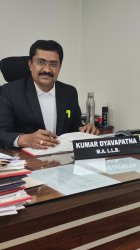
From drafting an effective legal notice to filing a summary suit and executing the decree, Advocate Kumar Dyavapatna handles money recovery matters for individuals and businesses across Bangalore.
Enforcing the Decree: Actually Getting Paid
Winning a decree is only half the battle. If the debtor still does not pay, you file an execution petition under Order 21 CPC. The court can then:
Attach Bank Accounts
Freeze and transfer the amount from the debtor’s bank accounts.
Attach and Sell Property
Movable and immovable property can be attached and sold by court auction.
Garnishee Orders
Direct a third party who owes money to the debtor (such as an employer or client) to pay you instead.
Arrest and Civil Detention
In cases of wilful refusal despite means to pay, the court can order detention in civil prison.
Mistakes That Weaken Recovery Cases
- Waiting too long: Letting the 3-year limitation run out.
- Informal threats: Aggressive messages or visits can expose you to counter-complaints for intimidation.
- Accepting partial payment without documentation: Always record any part payment in writing; it also extends limitation in your favour.
- Not knowing the debtor’s assets: A decree against a person with no traceable assets is difficult to execute. Identify assets early.
- Ignoring arbitration clauses: A suit filed despite an arbitration clause will be dismissed.
Frequently Asked Questions
Can I recover money lent to a friend without any written agreement?
Yes, if you can prove the transaction through bank transfers, messages, or witnesses. It is harder than a documented loan but not impossible.
Can I claim interest on the amount?
Yes. If the agreement specifies interest, the court awards it. If not, the court can award reasonable interest (commonly 6% to 12% per annum) from the date of demand or filing.
Is filing a police complaint for cheating a good recovery strategy?
Only if there was actual fraud or dishonest intent at the time of the transaction. A simple failure to repay is a civil matter, and police complaints in such cases are often refused or quashed.
Legal Disclaimer: This guide provides general information about money recovery options in India. The appropriate remedy depends on the nature of the debt and available evidence. Consult a civil advocate in Bangalore before initiating recovery action.