Section 143A NI Act • Interim Compensation • Bangalore Practice
Interim Compensation Under Section 143A NI Act: What Complainants and Accused Must Know
Court Powers to Direct Up to 20% Interim Payouts During Trial, Contesting Arbitrary Orders, and Execution & Recovery Mechanisms in Bangalore Courts
Introduced via the 2018 Amendment to the Negotiable Instruments Act, Section 143A empowered trial courts to direct the accused to pay interim compensation of up to twenty percent (20%) of the cheque amount during the pendency of a trial. Designed to curb dilatory tactics and provide speedy relief to aggrieved payees, this provision has become one of the most heavily litigated aspects of cheque bounce prosecution in Bangalore.
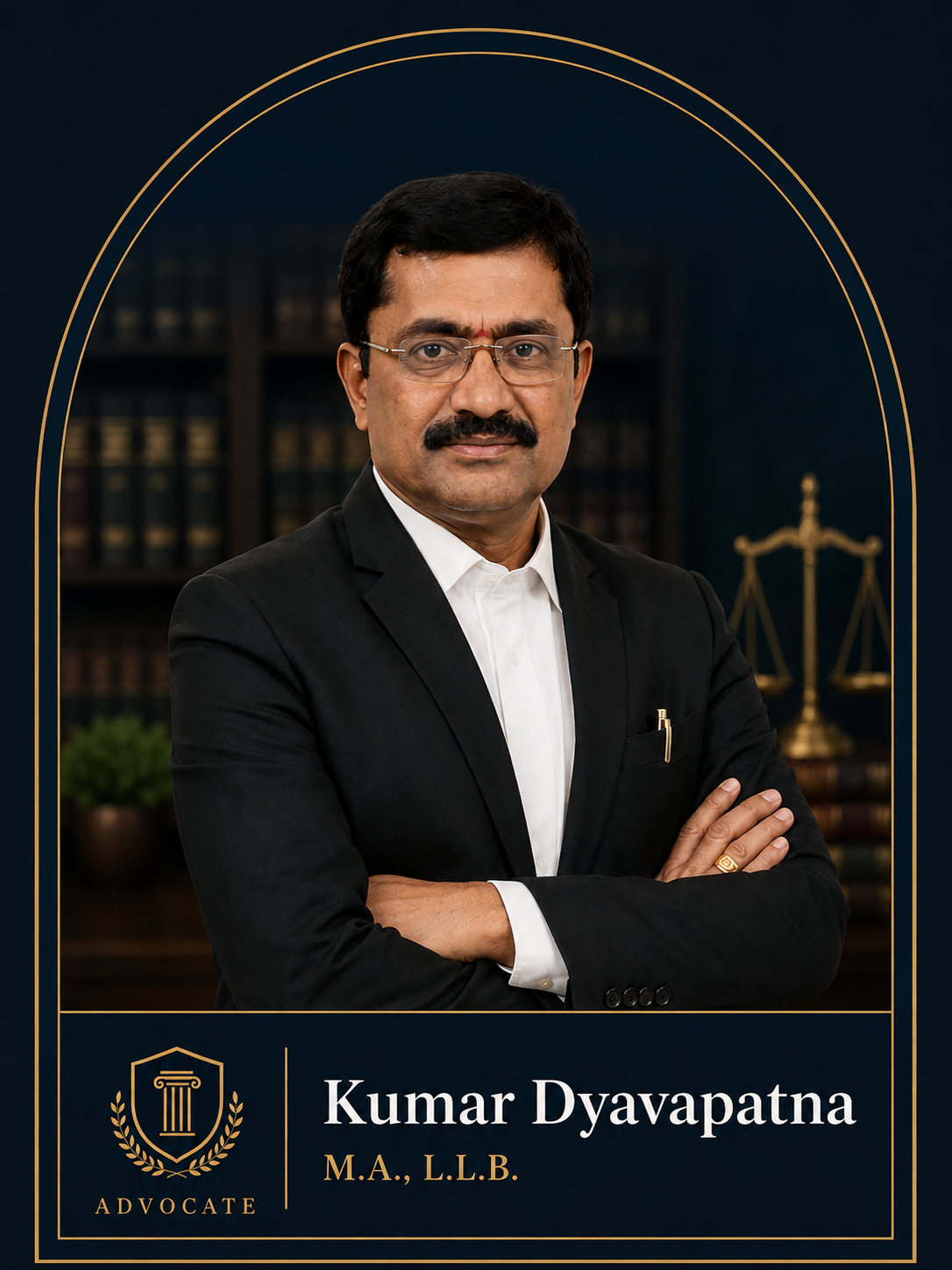
Whether you are a complainant seeking swift financial relief or an accused party looking to contest an unjust interim order, expert legal navigation is essential. Led by Advocate Kumar Dyavapatna, our Bangalore litigation chambers specialize in framing robust petitions, arguing discretionary thresholds, and securing favorable outcomes under Section 143A. To review our full range of litigation services, visit our primary cheque bounce lawyer in Bangalore portal.
Legislative Intent and Scope of Section 143A NI Act
The inclusion of Section 143A via the Negotiable Instruments (Amendment) Act, 2018 was a landmark legislative step designed to address the protracted delays in cheque bounce litigation. Historically, accused parties could prolong summary trials for years while enjoying the use of disputed funds, leaving payees uncompensated until final judgment.
Section 143A authorizes the court trying an offense under Section 138 to order the drawer of the cheque to pay interim compensation not exceeding 20% of the cheque amount. This payment can be ordered at a preliminary stage—specifically upon framing of charges or when the accused pleads not guilty—ensuring immediate financial liquidity for the complainant while maintaining the presumption of innocence. For dedicated legal counsel, consult our primary cheque bounce defense lawyer in Bangalore.
Facing a Section 143A interim compensation order in Bangalore? Consult senior counsel Advocate Kumar Dyavapatna.
Is Section 143A Mandatory or Discretionary for Trial Courts?
A central debate surrounding Section 143A has been whether the word “may” implies absolute judicial discretion or whether courts are bound to award the 20% compensation in every case. Recent apex court and High Court judgments have established that the power conferred under Section 143A is discretionary, not mandatory.
Trial courts are expected to apply judicial mind and evaluate attending circumstances—such as the prima facie strength of the complainant’s case, the nature of the defense raised, financial hardship, and whether the defense is frivolous or substantial—before deciding whether to award interim compensation and determining the exact percentage (e.g., 5%, 10%, or 20%).
03 • Contesting Orders
Grounds for Accused Parties to Contest Interim Compensation Orders
If an accused party is slapped with an arbitrary order directing the maximum 20% payout without judicial reasoning, robust defense strategies can be deployed to contest the order before higher forums:
Existence of a Triable Defense: Proving that the accused has raised a strong, tenable defense (such as misuse of security cheques or material alterations) that warrants a full trial before any financial payout is mandated.
Complainant’s Lack of Financial Capacity: Demonstrating that the complainant lacks the financial standing to advance the alleged loan, rendering the foundational claim weak.
Non-Application of Judicial Mind: Challenging orders that mechanically grant 20% compensation without recording brief reasons as mandated by procedural law.
Severe Financial Distress: Submitting verified documents establishing extreme financial hardship or insolvency, making immediate payment impossible.
04 • Complainant Strategy
Strategic Advantages and Application Process for Complainants
For complainants, Section 143A serves as an effective mechanism to secure early financial recovery and test the bona fides of the accused. To maximize success, complainants should file a formal, well-reasoned application immediately after the plea stage or framing of charges.
The application should highlight the undeniable dishonor of the cheque, the statutory presumption under Section 139, and any dilatory tactics adopted by the accused to delay proceedings. Securing an interim payout provides critical financial cushioning while the main trial progresses.
Need to file a Section 143A application in a Bangalore court? Connect with our expert legal recovery team.
Timelines, Extensions, and Consequences of Non-Payment
Once a court directs interim compensation under Section 143A, the accused is statutorily required to pay the amount within 60 days from the date of the order. The court may grant an extension of up to 30 days upon sufficient cause being shown, bringing the maximum permissible window to 90 days.
Failure to pay within this timeframe has serious procedural ramifications. Under Section 143A(5), the unpaid interim compensation is recoverable as if it were a fine imposed under the Code of Criminal Procedure (CrPC), which can trigger attachment of property or further coercive recovery steps.
06 • Recovery Mechanisms
Recovery Mechanisms and Enforcement of Interim Orders
When an accused defaults on paying interim compensation within the stipulated 60-to-90-day window, the complainant does not have to wait for the final judgment to realize the funds.
The complainant can move the trial court for execution proceedings under Section 421 of the CrPC. This empowers the court to issue distress warrants, attach movable or immovable assets of the accused, or initiate coercive recovery steps to recover the awarded 20% amount.
07 • Refund Upon Acquittal
Refund Protocol and Remedies Upon Acquittal of the Accused
A vital safeguard built into Section 143A(2) is that if the accused is ultimately acquitted, the court shall direct the complainant to repay the interim compensation amount to the accused, along with prevailing bank interest rates.
This ensures that complainants do not misuse interim provisions to unjustly enrich themselves through weak complaints. If an acquittal is secured, our legal team aggressively pursues the refund of all disbursed interim funds along with interest.
08 • Judicial Precedents
Landmark Judicial Rulings Governing Section 143A
Our practice relies on landmark apex court and High Court pronouncements—such as Surinder Singh Deswal v. Virender الجهات and subsequent authoritative rulings—which clarify that while the power to award interim compensation is a potent tool to expedite justice, it must be exercised judiciously after considering the specific merits of each case rather than as an automatic blanket order.
09 • Comparative Analysis
Comparative Matrix: Complainant vs. Accused Interim Strategy
Legal Aspect
Complainant Strategy
Accused Defense Strategy
Filing Timing
File application immediately upon framing of charges or plea.
Object to premature filing before initial scrutiny of merits.
Quantum Sought
Argue for maximum 20% based on clear dishonor and liability.
Argue for nil or minimal percentage citing strong triable defense.
Default Handling
Invoke Section 421 CrPC recovery and distress warrants immediately.
Seek reasoned extensions or challenge arbitrary execution orders.
Post-Acquittal
Comply with refund and interest mandates if acquittal is pronounced.
File immediate execution petition to recover disbursed interim funds.
10 • Professional Expertise
Why Retain Advocate Kumar Dyavapatna for Your Case
Navigating Section 143A interim compensation proceedings in Bangalore requires sharp legal acumen and deep trial experience. Retaining our chambers ensures:
23+ Years of Trial Court Mastery: Extensive experience handling complex cheque bounce litigation across Bangalore courts.
Strategic Pleading: Crafting airtight interim applications for complainants or robust contestation petitions for accused parties.
Execution & Recovery Expertise: Efficient handling of recovery mechanisms and appellate challenges.
Uncompromising Advocacy: Dedicated representation focused on protecting your financial interests and legal rights.
11 • Clear Answers
Frequently Asked Questions (FAQs)
Is interim compensation under Section 143A mandatory in every cheque bounce case?
No. Supreme Court and High Court rulings have established that Section 143A confers discretionary power on trial courts, requiring judicial evaluation of merits rather than automatic awards.
What is the maximum percentage of interim compensation a court can order?
Under Section 143A, the court can direct the accused to pay up to twenty percent (20%) of the cheque amount as interim compensation.
What happens if the accused fails to pay the interim compensation within 60 days?
The unpaid amount is recoverable as if it were a fine under Section 421 of the CrPC, which can lead to attachment of property or coercive execution steps by the court.
Can I get my money back if I am acquitted of the Section 143A charges?
Yes. Section 143A(2) mandates that if the accused is acquitted, the complainant must refund the interim compensation amount along with prevailing bank interest.
Why should I hire Advocate Kumar Dyavapatna for Section 143A matters in Bangalore?
With over 23 years of trial expertise in Bangalore, Advocate Kumar Dyavapatna provides expert representation for both complainants seeking recovery and accused parties contesting unfair interim orders.
Navigating Section 143A Interim Compensation in Bangalore? Get Expert Counsel Today.
Whether you need to secure interim recovery as a complainant or contest an unjust payout order as an accused, contact Advocate Kumar Dyavapatna for trusted legal representation.
◆ Bar Council Verified◆ 23+ Years Experience◆ 2000+ Cases Handled◆ Karnataka High Court Practice◆ Family Court Bengaluru◆ Confidential Consultation◆ Response Within 30 Minutes◆ English • Hindi • Kannada◆ Bar Council Verified◆ 23+ Years Experience◆ 2000+ Cases Handled◆ Karnataka High Court Practice◆ Family Court Bengaluru◆ Confidential Consultation◆ Response Within 30 Minutes◆ English • Hindi • Kannada